Emotional Flooding
7 May – 1 June 2026
Emil Krog, Nellie Lindquist, Sidsel Ana Gajardo, YUNTA Collective
Weekdays: 12:00-14:00 / 15:00-17:00
Weekends: 12:00-14:00 / 15:00-17:00
Closed on Mondays
The exhibition is curated and organised by Anouska Kobus and Simen Frantzen
Thank you to The Danish Arts Foundation & Nordic Culture Point for supporting the exhibition.
A state of flooding as a gradual unravelling of the orders through which the world appears intelligible pervades Emotional Flooding. This disintegration reads as both a discrete event and an extended annus horribilis without clear origin or end, in which the world’s frameworks slip from their moorings before our eyes. As a faint premonition, this condition has long registered as a resonant undertone in narratives and images. Language, image, and matter shift from their assigned positions. From this movement emerges another sensibility: a listening directed towards what remains unarticulated, towards what is sensed.
A bird may function as a figure of knowledge. In its song, environment, and repetition, origin and variation converge, rendering distinctions unstable. In Roman tradition, the flight and song of birds were read as signs of heaven’s movements – in Norse mythology, ravens circle the outer reaches of the world, bearing accounts from distant realms. This refusal to settle into fixed systems recalls a bird’s flight: tangible yet elusive, present yet ungraspable.
The moon operates as a quiet regulator within this system, a rhythmic force binding water, bodies and time. Its cycles of return and displacement stand in tension with the acceleration of financial temporality. Venice thus appears as a node where economic, geological and cosmic temporalities overlap. Is it then surprising that the city resists comprehension? It stages its own interpretations in advance, where figures from the commedia dell’arte return as if rehearsing familiar clichés, only to displace them again. Venice operates as an apparatus that generates both recognition and misrecognition in the same gesture.
The 61st Biennale’s theme, In Minor Keys, resonates with a shift away from excess and spectacle towards finer tonalities: subdued gestures, attentiveness, and forms of care embedded in repetition and slowness.
Within this stratum, a labyrinthine economic structure emerges, in which the new and the historical interweave. As an early banking and trading centre, Venice developed increasingly sophisticated financial techniques, through which value circulated both locally and far beyond. Like a tide shaped by lunar gravity, capital moves through the canals, while recurring acqua alta continually reshapes the city’s ecosystem – one that endures without succumbing to the flood.
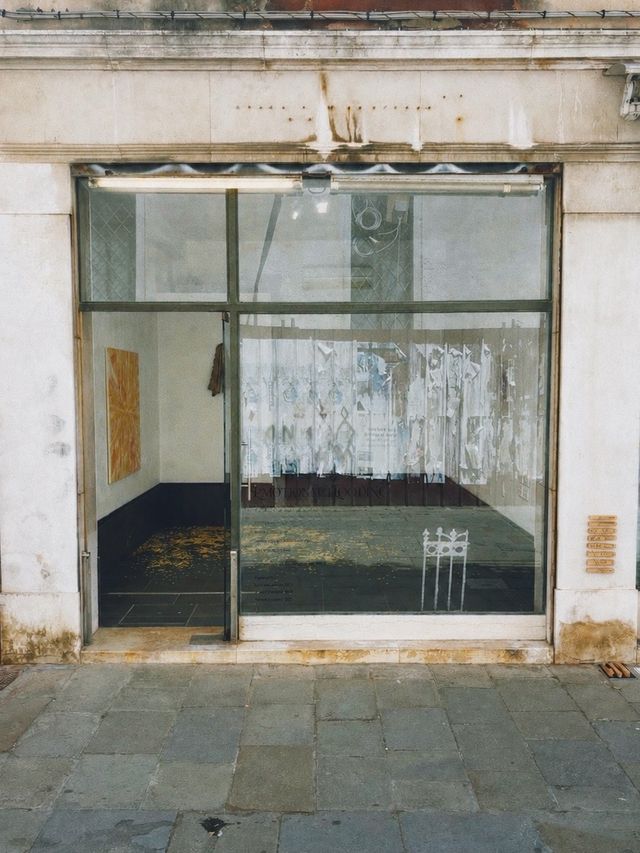
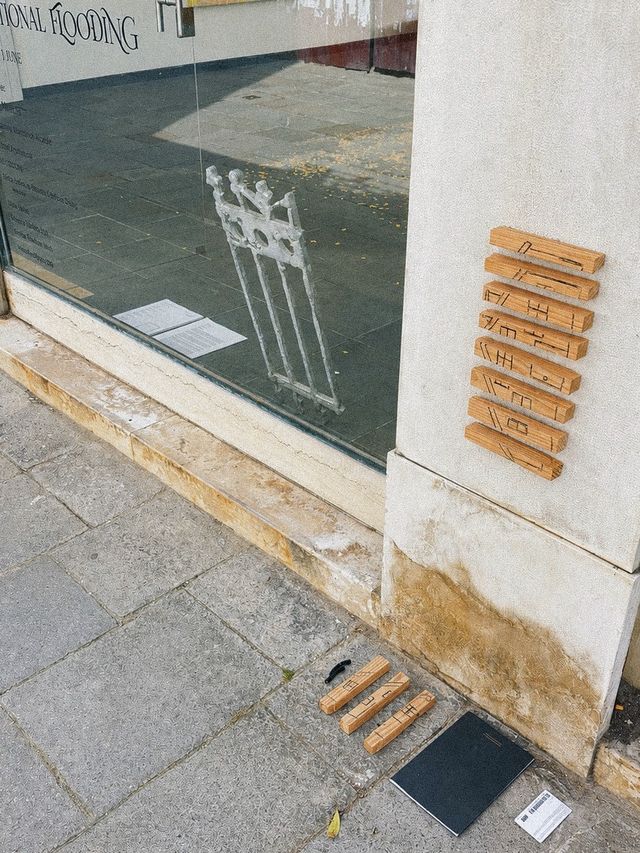
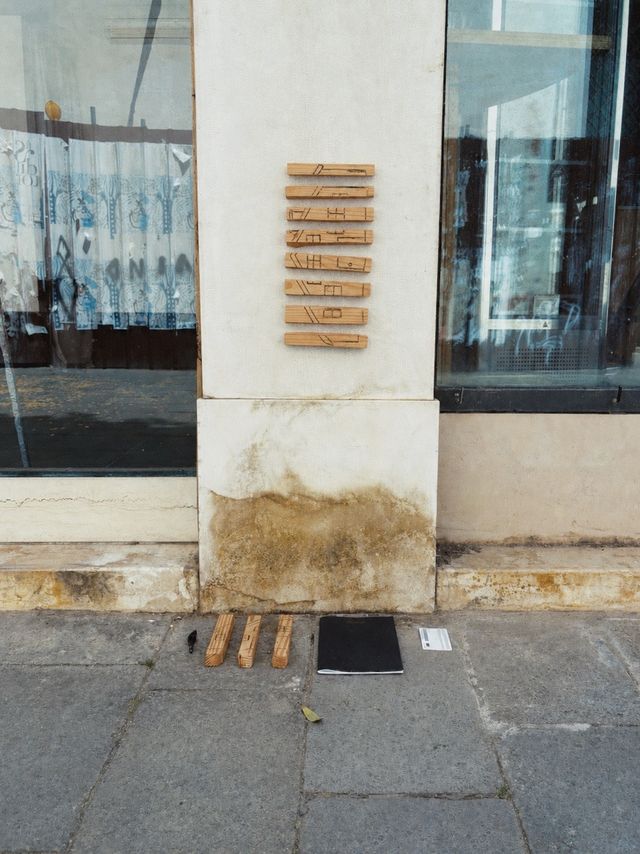
Against this backdrop, YUNTA Collective’s Tally Sticks condense a longer history of material inscription. Referenced from Pliny the Elder to Marco Polo, tally sticks appear as a cross-cultural system for recording debt across trade networks. In the Nordic context, the rune staff extends this logic, inscribing time, fate, and cosmology in wood aligned with lunar and seasonal rhythms. The sculpture is shaped as a wheel, cut into 16,5 cm segments corresponding to the group members’ average thumb-to-pinkie span. Traditionally personalising agreements between debtor and creditor, the form is here reframed within a cyclical feminist economy, where care circulates as an alternative to extractive systems. Each stick carries a simple drawing of a house – an elementary gesture through which notions of home and community briefly coincide, as an antidote to the fluid instability of flood and circulation described above.
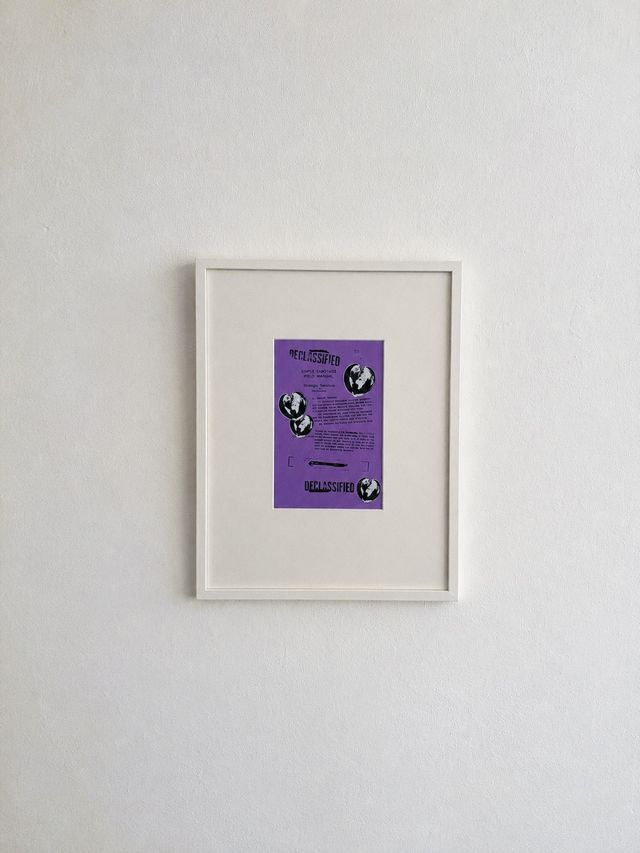
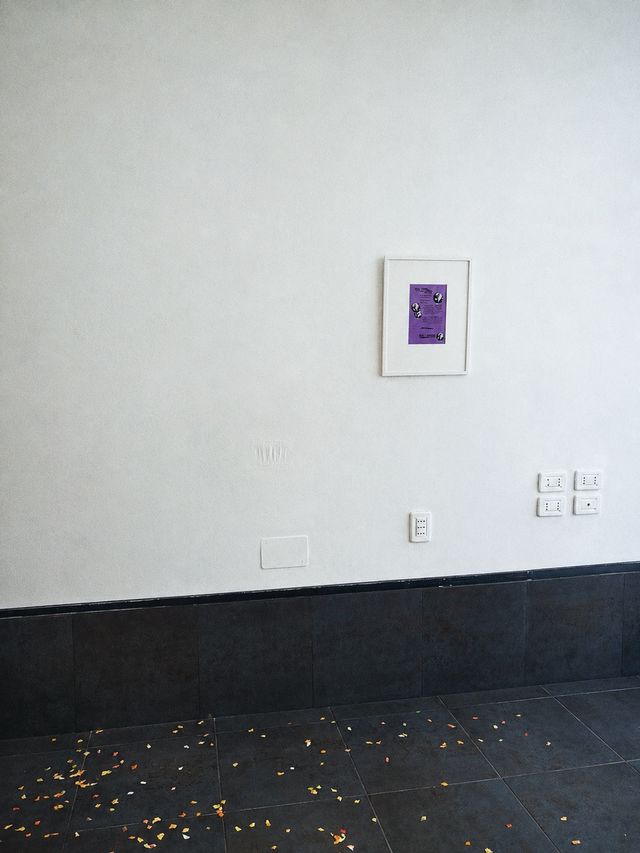
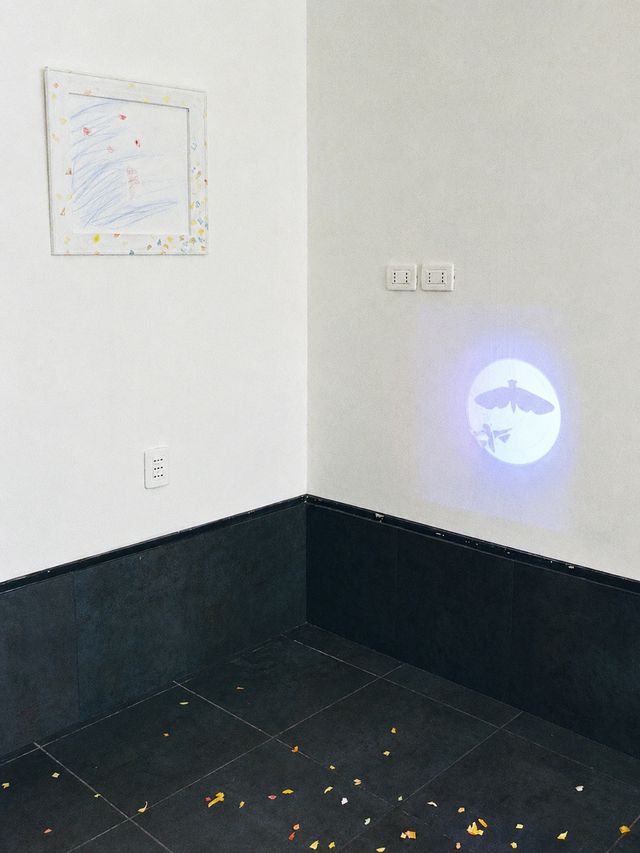
In Make the World by Nellie Lindquist, disturbance arises through minute displacements in cinematic continuity, where moths enter the projection and interrupt the beam of light. The image flickers and destabilises from within – a choreography of attraction and disorientation, where circling movements around light generate patterns of desire and loss of orientation. The installation permeates the space with questions that challenge the relation between ideology, fiction, and libidinal affect, in relation to political manipulation, and asks by whom, and how, the world is made. In 1944, the OSS (a precursor to the CIA) created the Simple Sabotage Field Manual, with instructions for civilians, originally in Nazi-occupied Europe, to carry out minor acts of disruption. Lindquist’s work draws on a small detail in this manual, featuring moths as unwitting saboteurs, flitting through a dark space toward a beam of light, obscuring the unseen projection. “Anyone can break up a showing of an enemy propaganda film by putting two or three dozen large moths in a paper bag. Take the bag to the movies with you, put it on the floor in an empty section of the theater as you go in and leave it open. The moths will fly out and climb into the projector beam, so that the film will be obscured by fluttering shadows.”
Emil Krog opens a space of condensed temporality through repetition. Blending painting and performance through ritualised actions, he creates a vitalist language in which the body and mind are interconnected. Here, Krog’s engagement with meditative practice becomes tangible and comes to function as a means of re-enchanting the relationship between our inner and outer worlds, giving form to emotional intensities as a kind of tidal movement.
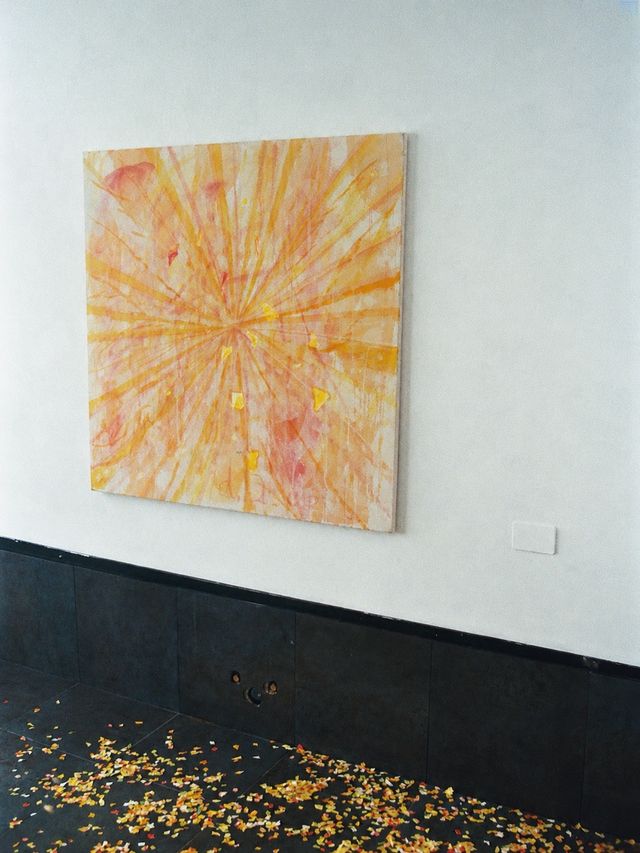
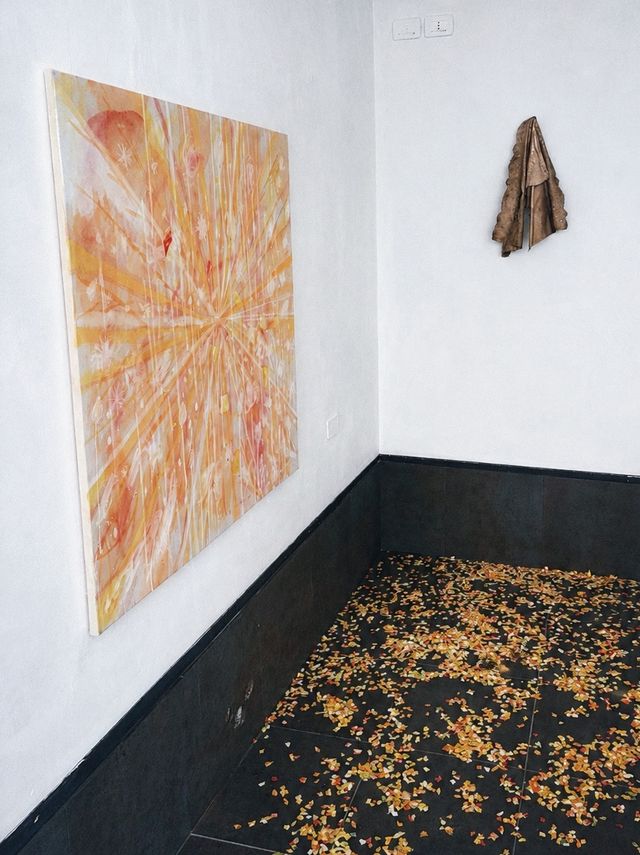
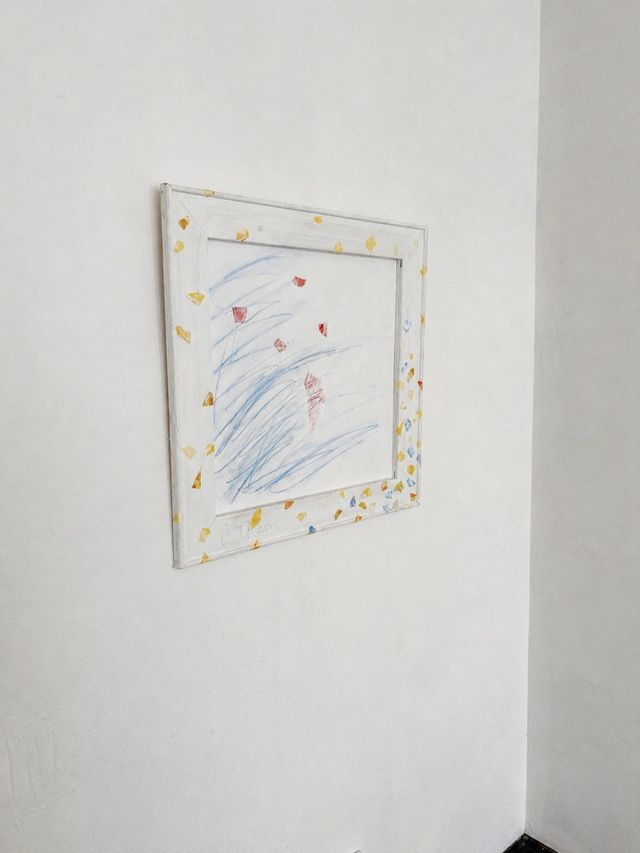
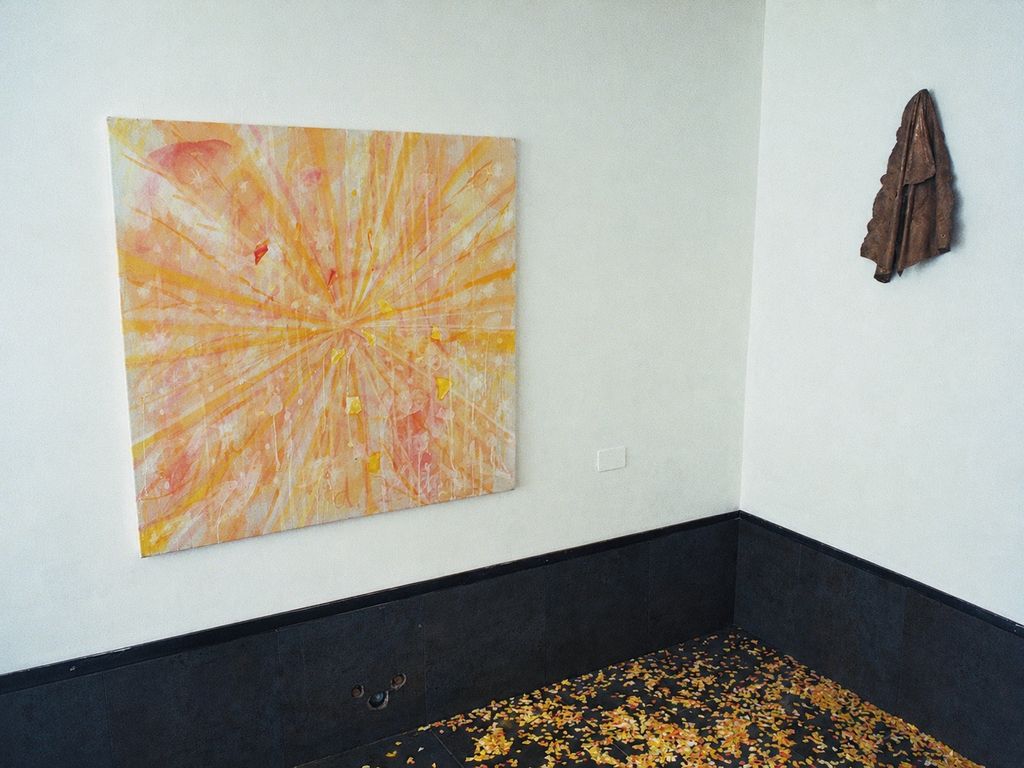
In the performance Konfetti the painting is split open into hundreds of confetti pieces. Following a choreographed trajectory, Krog repeatedly casts heaps of confetti in the air. A colour field surrounds the artist as his movements intensifies, now jumping while releasing the painted paper fragments: orange, rosy, yellowy and greenish confetti fill up the space and land on the floor in uncontrolled patterns. The rhythmic act of flinging confetti in the air holds an energy of celebration, of hope. In this light, the performance can be read as a stirring and radical meditation on hope and subsequently our belief in the future. By activating the fusion of the senses in a collective space, Krog invites us into a state of total perception.
This condition resonates with the painterly gestures that structure D. 2. april. Rendered in the same bright colour palette as the confetti, the painting gathers energy from a charged surface and draws it into a central vanishing point. Informed by single-point meditation, Krog assembles sensorial traces from unusual materials such as reworked paper fragments, glue and glitter and draws us into a dreamy, almost cosmic space- pulled into the vanishing point. Connecting the inwards and outwards energies, Krog uses the date the painting was begun in his titles as a way of fixing concrete meaning to abstraction. This pathway extends into D. 17. april, where matter, stripped of anything superfluous seems to be in flux across the surface of the painting.
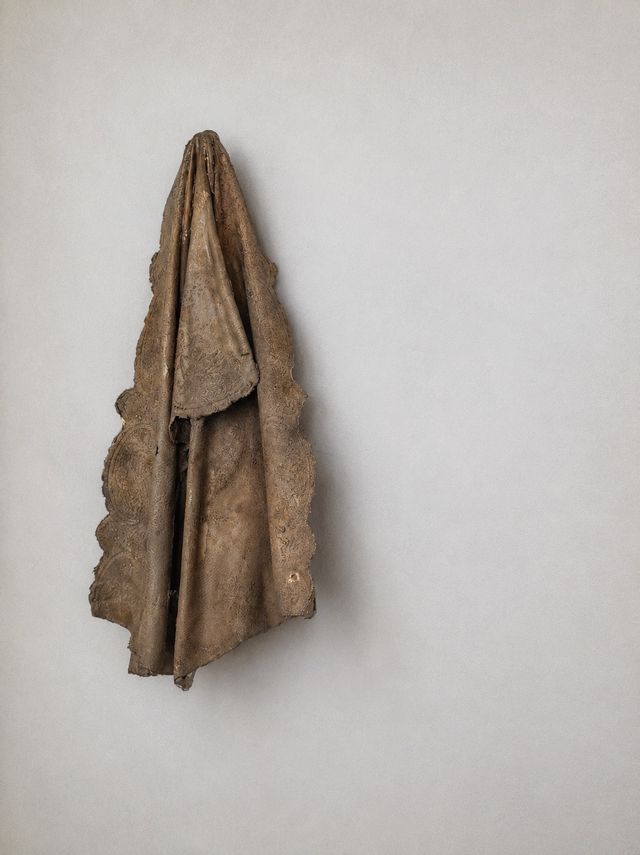
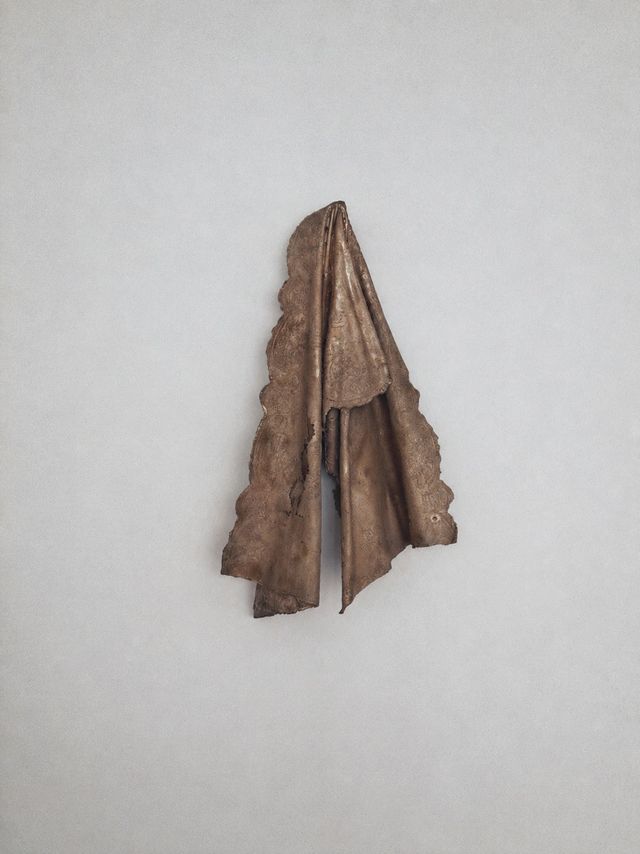
Sidsel Ana Welden Gajardo’s work Veil Relaxing at Home renders vulnerability as material weight in bronzed veils, where folds – once light and porous – are fixed into density. In Gajardo’s work, movement is arrested and transformed into a substance carrying both grief and history, as in Trespassing with Metal; the closed form of a grave shifts towards an architecture of passage between presence and absence, where thresholds and fragments of enclosure compose a shared gate.
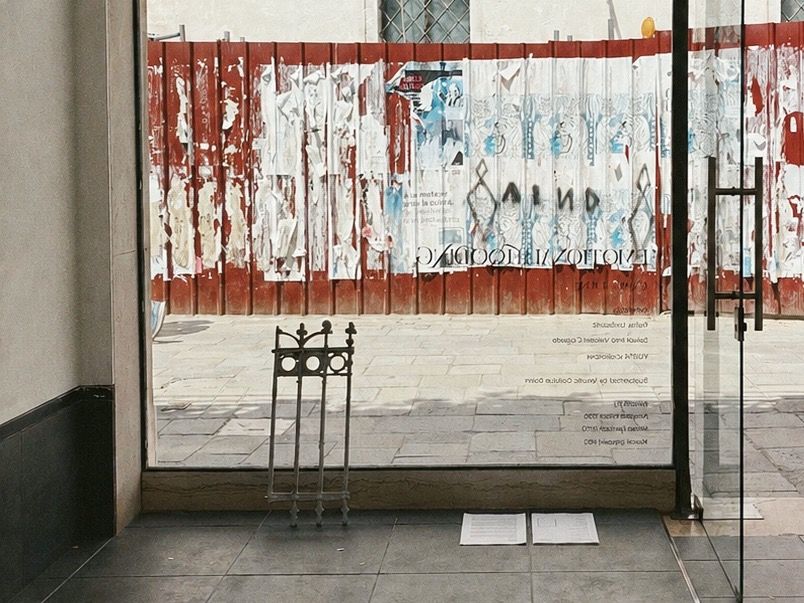
The process of grief is often divided rather than connective, an approach Gajardo’s work critically comments on. At the iconic Assistens Cemetery in Copenhagen, where her father is buried, Gajardo has modified and recast remnants from old gates, doors, and fences into new interpretations, in contrast to the north but in similarity to the ways of San Michele Cemetery in Venice – connecting the dead, the living, and those lost, opening the floods of an array of emotional intensities.
This weave knows no stable boundaries – the flight of birds and the performativity of language, economic inscription and the movement of water, lunar cycles and market acceleration form a shared sphere in which the individual and the collective remain entangled. Emotional Flooding inhabits this condition: between order and dissolution, interpretation and excess, the desire to stabilise the world and its continual displacement. Here, inundation takes on its specific tone, one that evokes a landscape shaped by prolonged twilight and a light that lingers at the horizon – a distinctly Nordic melancholy in which stillness and weight carry heightened intensity. Flooding becomes a horizon of perception: a way of sensing the world as its structures soften and relations reconfigure.
Emotional Flooding is a Nordic group exhibition in Venice 2026, highlighting young artists from the Nordic countries outside the main biennale pavilions. The exhibition is curated and organised by three curators – Anouska Kobus, Simen Frantzen and Marcel Engdahl – who bring together their distinct networks and experiences to create a shared platform.
Curatorial Essay by Anouska Kobus, Simen Frantzen and Marcel Engdahl
The exhibition is supported by The Danish Arts Foundation (Statens Kunstfond) & Nordic Culture Point (Nordisk Kulturkontakt). Documentation is available here.
Special thanks to Matteo Binci and Donato Ramazzina for their technical support.
Exhibition Coordinator: Maria Chiara Scatassa Gallery Assistant: Grazia Mori
Contact: +47 402 94 718